Best Practices for Storing Truck Tires in Cold Weather
When temperatures drop, the rubber compounds in truck tires undergo physical changes that can affect their performance and lifespan. Cold weather causes rubber to become stiffer and more susceptible to cracking, especially if the tires are stored improperly. Understanding how environmental factors influence tire materials is essential for maintaining their condition during winter months. Factors such as humidity, light exposure, and the way tires are stacked all play a role in preserving rubber integrity until the tires are needed again.
Proper storage practices are not only about protecting the tire itself but also about ensuring safety and reliability when the tires are eventually mounted and used. While the exact storage conditions may vary depending on the facility and climate, general principles apply across most cold weather scenarios. By controlling the storage environment and following structured procedures, it is possible to minimize the degradation that cold temperatures can cause.
This article outlines several key approaches for storing truck tires during cold weather, focusing on humidity management, shielding from direct sunlight, and correct stacking methods. These practices are based on industry observations and material science principles, rather than on guaranteed outcomes, as results depend on many variables including tire age, compound formulation, and local weather patterns.
Understanding Cold Weather Effects on Tire Rubber
Rubber is a viscoelastic material, meaning its properties change with temperature. In cold conditions, the polymer chains within the tire compound become less mobile, leading to increased stiffness and reduced flexibility. This state, sometimes referred to as glass transition, makes the rubber more brittle. If a brittle tire is subjected to sudden impacts or even routine handling during storage, micro-cracks may develop on the surface.
Beyond surface cracking, cold temperatures can also accelerate the aging process of the rubber. Oxidation, which is the chemical reaction between rubber and oxygen, continues even in low temperatures, though at a slower rate. However, when combined with other stressors such as moisture or sunlight, the overall rate of degradation can remain significant. The key is to keep the storage environment stable and moderate, avoiding extreme temperature swings that place repeated stress on the tire structure.
It is important to note that not all tire compounds respond identically to cold. Tires designed for winter use often contain higher levels of natural rubber and special additives that retain flexibility at lower temperatures. But even these specialized tires benefit from controlled storage conditions when not in active use. The goal is to slow the natural aging process, not to stop it completely.
Controlling Humidity Levels in Storage Areas
Moisture in the air can negatively affect tire rubber in several ways. High humidity encourages the growth of mold and mildew on tire surfaces, which can degrade the rubber over time. Additionally, moisture can cause corrosion of the bead area, where the tire contacts the rim, compromising the seal and leading to air loss when the tire is later mounted.
Indoor storage areas should ideally maintain relative humidity levels between 40% and 60%. This range is generally considered favorable for rubber preservation, as it balances the risk of condensation and excessive dryness. If the storage space is too dry, rubber can become brittle more quickly; if too moist, other issues arise. Dehumidifiers or ventilation systems can help regulate humidity, especially in basements or unheated garages where winter moisture might be higher than expected.
It is also advisable to store tires off the floor, using pallets or shelving, to prevent contact with any moisture that may accumulate on concrete surfaces. Condensation can form on cold floors even when the air feels dry. Elevating the tires allows air to circulate around them, reducing the chance of localized dampness. Regular monitoring with a simple hygrometer can provide useful data for adjusting storage conditions as needed.
Avoiding Direct Sunlight Exposure
Ultraviolet (UV) radiation from sunlight is a well-known accelerator of rubber degradation. Even in winter, when the sun is lower in the sky and days are shorter, UV rays can reach tires through windows or skylights. UV light breaks down the polymer chains in rubber, leading to surface cracking, fading, and loss of elasticity.
To protect stored tires, they should be placed away from windows and other sources of direct sunlight. If window exposure is unavoidable, covering the tires with an opaque material such as a light-blocking tarp or UV-resistant cover can provide a barrier. However, covers should be breathable to prevent trapping moisture underneath. Plastic sheeting that does not allow air flow should be avoided, as it can create condensation.
If tires are stored outdoors under a roof or lean-to, orientation matters. Sheltered areas that block direct sun for most of the day are preferable. Even indirect light can have cumulative effects over several months, so minimizing exposure is a prudent practice. Tires that show signs of UV damage—such as a chalky appearance or fine surface cracks—may still be usable, but their remaining service life can be affected.
Proper Stacking and Support Techniques
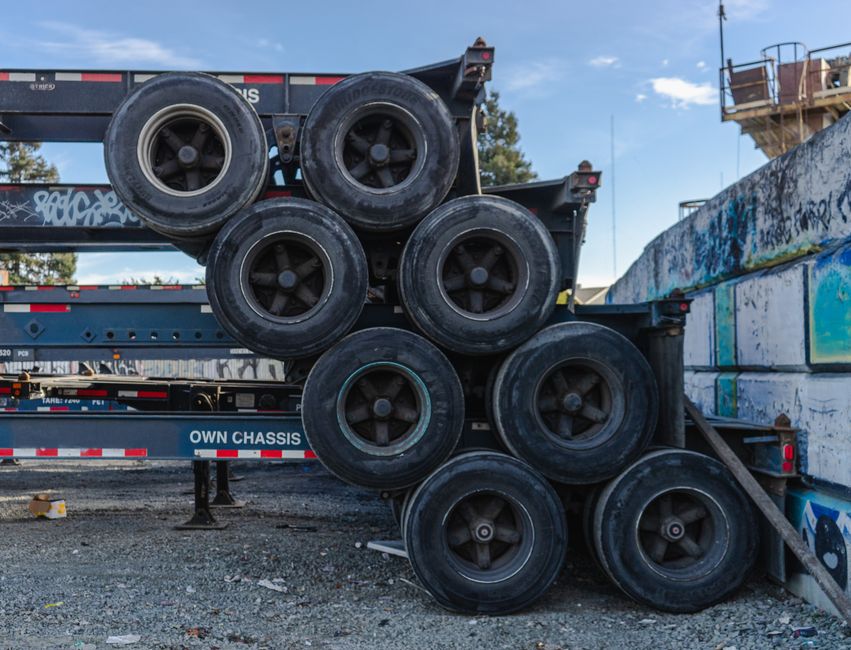
The way truck tires are stacked influences how forces are distributed across the rubber and sidewalls. Improper stacking can lead to permanent deformation, flat spots, or stress concentrations that weaken the tire structure. For truck tires, which are heavy and have thick sidewalls, correct stacking is particularly important.
When stacking tires horizontally (flat on the tread), they should be placed in columns no more than four to five tires high, depending on tire size. The weight of the upper tires compresses the lower ones, and excessive height can cause the bottom tires to distort. Using a stable, level surface and rotating the stack periodically can help distribute pressure more evenly. Some storage facilities use tire racks that support each tire individually to eliminate compression altogether.
Another common method is vertical stacking, where tires are placed on their sidewalls. This approach reduces compressive load on the tread area but can put stress on the sidewalls if not done carefully. Vertical storage is often used for tires on rims, as the rim helps maintain shape. For tires without rims, stacking them vertically requires proper supports to prevent the sidewalls from bulging or folding.
Regardless of the method chosen, the storage area should be clean and free of sharp objects that could puncture or gouge the rubber. Tires should also be kept away from sources of ozone, such as electric motors or welding equipment, as ozone accelerates rubber cracking. These environmental factors, combined with stacking practices, contribute to the overall condition of stored tires.
Additional Considerations for Long-Term Storage
For tires that will be stored throughout an entire winter season or longer, additional steps may help maintain rubber integrity. One common practice is to clean the tires thoroughly before storage to remove dirt, grease, and road salt residues. Salt can be hygroscopic, attracting moisture, and may contain chemicals that react with rubber over time. A mild soap and water solution followed by thorough drying is usually sufficient.
Some storage guidelines suggest applying a rubber protectant or conditioner designed for tire storage. These products are formulated to provide a protective layer that reduces oxygen and UV exposure. However, not all conditioners are suitable for all tire compounds, and their long-term effects are not fully understood across all climates. Users should evaluate product compatibility with their specific tire models and follow manufacturer recommendations for application.
Tire pressure is another consideration. If tires are stored with rims, they may be kept at normal operating pressure or slightly lower to reduce stress on the rubber. But if storage conditions involve extreme cold, higher pressure can exacerbate freezing-related issues. There is no universal rule; decisions depend on the tire design and storage duration. Many fleet operators choose to store tires deflated to minimal pressure to avoid sidewall distortion, then reinflate before use.
Monitoring and Maintenance During Winter Months
Periodic inspection of stored tires is recommended, even if they are not being used. Over the course of a cold season, conditions within the storage area can change. A sudden warm spell might cause condensation on cold tires, or a leaking roof could introduce moisture. Checking the tires every few weeks allows for early detection of problems such as mold, cracking, or water accumulation.
During inspections, the storage environment itself should be assessed. Temperature and humidity logs can help identify trends and indicate when adjustments to ventilation or heating are needed. If tires show signs of flat spotting or deformation from stacking, repositioning or redistributing the stack may alleviate the issue before it becomes permanent.
When the time comes to remove tires from storage for use, they should be allowed to warm up gradually in a temperature-controlled area before being mounted and inflated. Rapid temperature changes can cause sudden swelling or contraction, which may stress the rubber. Allowing several hours for the tires to reach ambient temperature reduces that risk. A final visual and tactile inspection before mounting is a prudent step to confirm that the tires have maintained their condition.
By following these structured approaches to humidity control, light management, stacking, and ongoing monitoring, truck tire storage during cold weather can be conducted with an emphasis on material preservation. As with all aspects of tire care, outcomes depend on multiple factors, and no single method can eliminate the natural aging of rubber. Nonetheless, informed storage practices help support longer usable life and safer performance when the tires are returned to service.